

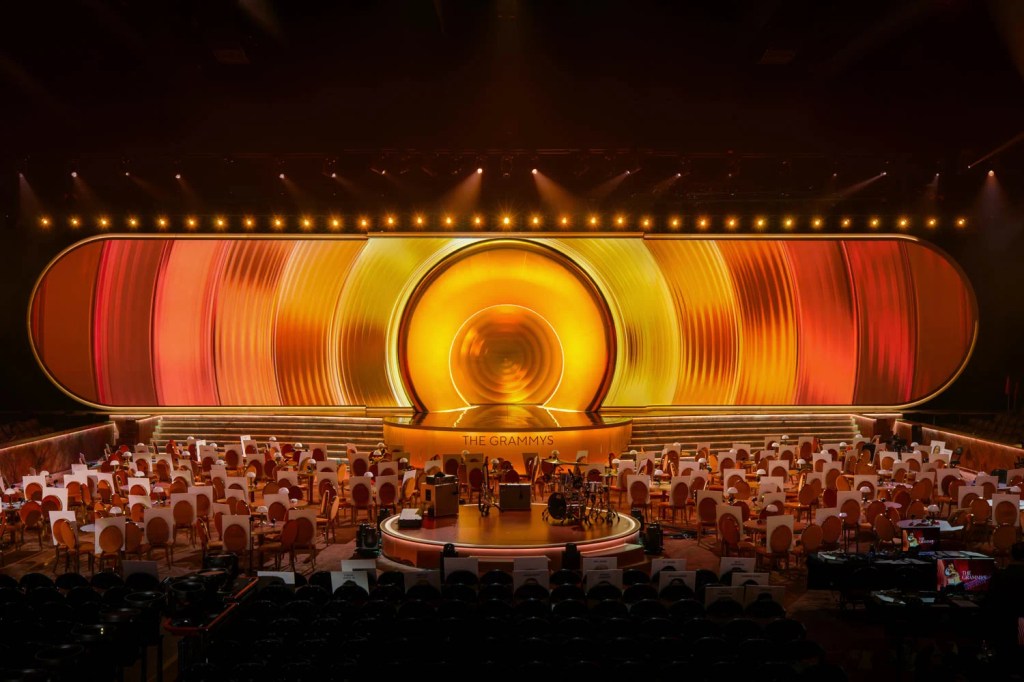
Music’s biggest night was equal parts iconic, celebration, political expression and unforgettable performances when the 68th Annual Grammy Awards returned to Crypto.com Arena Sunday night.
Trevor Noah hosted for a sixth and final time, warming up the crowd with sharp cultural humor and crowd work that set the tone for a night that blended artistry with activism. Noah poked fun at the sprawling list of Grammy categories, quipped about celebrities and slipped into a playful Donald Trump impression to rib Nicki Minaj’s absence from the show.
Bad Bunny made history, winning Album of the Year for DeBí TiRAR MáS FOTos, the first all-Spanish-language album ever to claim the top prize at the GRAMMYs.
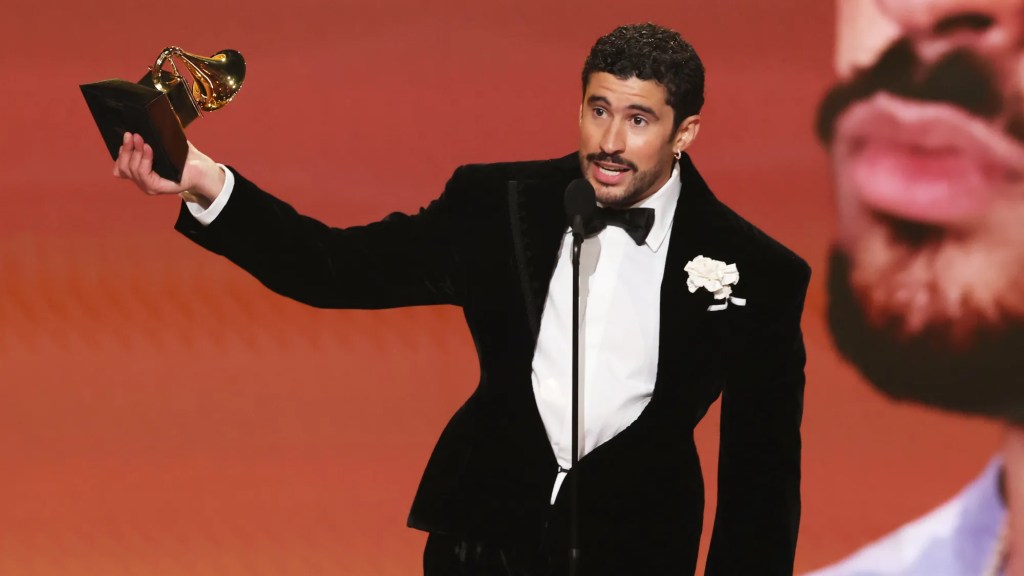
The Puerto Rican superstar also took home Best Música Urbana Album, both met with standing ovations as he used his speeches to honor immigrants and his heritage.
“We’re not savages… We are humans and we are Americans,”
Bad Bunny said, drawing one of the night’s loudest responses.
His win isn’t just a musical milestone – it’s a cultural moment that resonated amid broader discussions about representation in the industry, and the inhumane acts happening across America to latino and brown people.
Major Wins: General Field
- Album of the Year: DeBí TiRAR MáS FOTos – Bad Bunny
- Record of the Year: “luther” – Kendrick Lamar & SZA
- Song of the Year: “WILDFLOWER” – Billie Eilish & FINNEAS
- Best New Artist: Olivia Dean
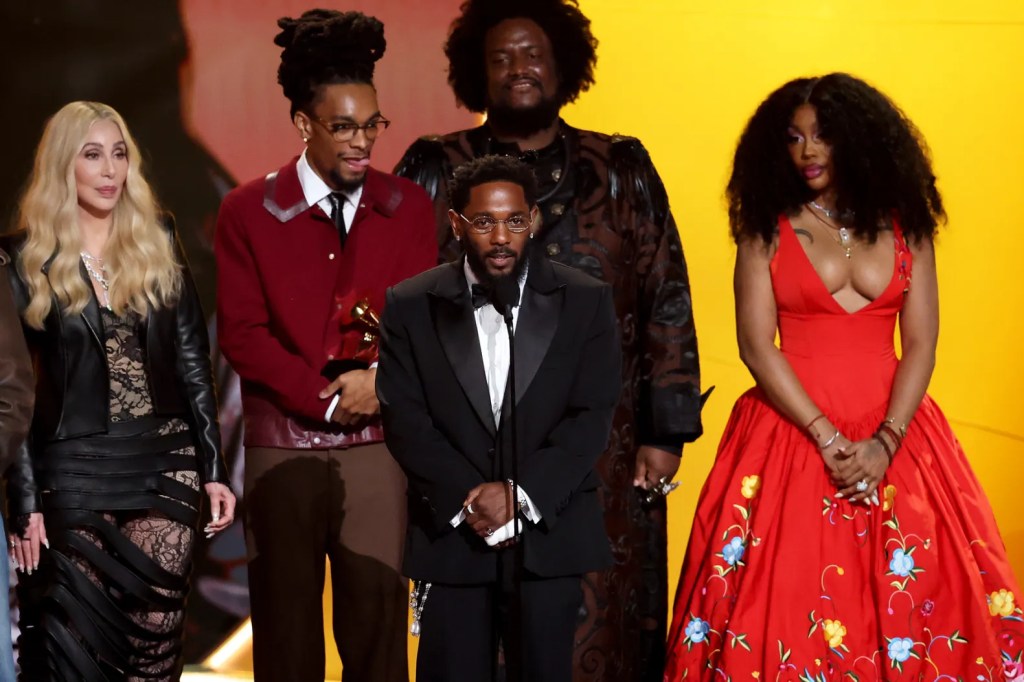
The GRAMMYs’ most closely watched categories reflect both continuinly and evolution. Kendrick Lamar, already one of the most decorated artists in the Academy’s history, won Record of the Year for “luther,” his collaboration with SZA. The win further cemented Lamar’s legacy, making him the most awarded rapper in Grammy history.
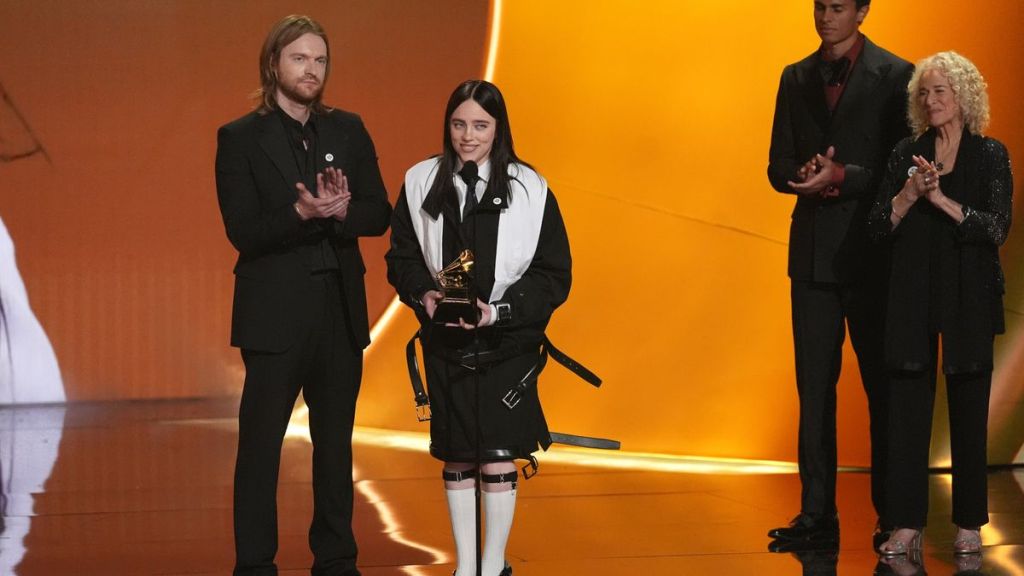
Billie Eilish and Finneas claimed the Song of the Year for “WILDFLOWER,” a quieter, introspective track that stood out in a category stacked with pop heavyweights. Eilish used her speech to emphasize solidarity with immigrant community and further condemning the deployment of ICE, a message echoed by several artists throughout the night.
“No, one is illegal on stolen land.” – Billie Eilish
Meanwhile, Olivia Dean captured Best New Artist, delivering one of the evening’s most heartfelt speeches as she thanked her family and reflected on carving space for herself in an industry that often resists subtlety.
Pop categories leaned theatrical and bold. Cynthia Erivo and Ariana Grande won Best Pop Duo/Group Performance for “Defying Gravity,” a win that felt inevitable given the song’s cultural footprint and vocal ambition. Lola Young surprised many by taking Best Pop Solo Performance for “Messy,” edging out more mainstream chart focuses, reminding fans that the GRAMMYs awards quality over popularity.
Rap remained firmly under Kendrick Lamar’s control. In addition to Record of the Year, he won Best Rap Album for GNX, reinforcing a night where his influence was felt even in categories he didn’t dominate outright.
Rock and alternative categories brought their own quiet shocks. The Cure won their first Grammy awards ever, taking home honors for both Best Alternative Music Album and Best Alternative Music Performance, an overdue recognition that resonated deeply with longtime fans.
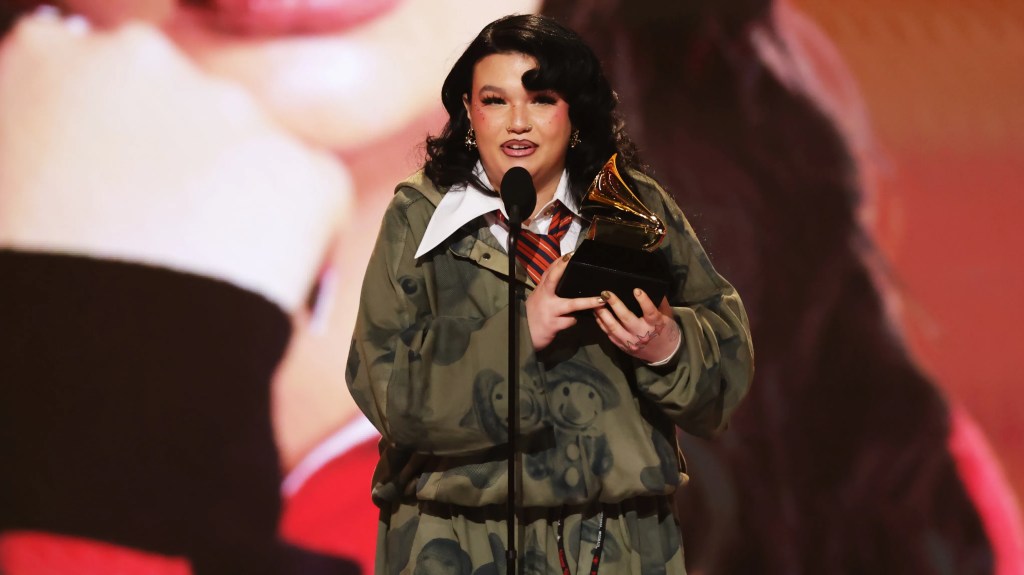
The show’s performances balanced high energy with emotional weight. Bruno Mars and ROSÉ opened the ceremony with a polished, crowd-pleasing performance of “APT.” Lady Gaga delivered one of the night’s most talked-about sets with “Abracadabra,” leaning fully into theatrical pop spectacle.
Later, Kendrick Lamar anchored a powerful tribute to Luther Vandross, grounding the show in musical legacy and reverence. Several tributes to late artists and cultural icons added emotional gravity without slowing the momentum.
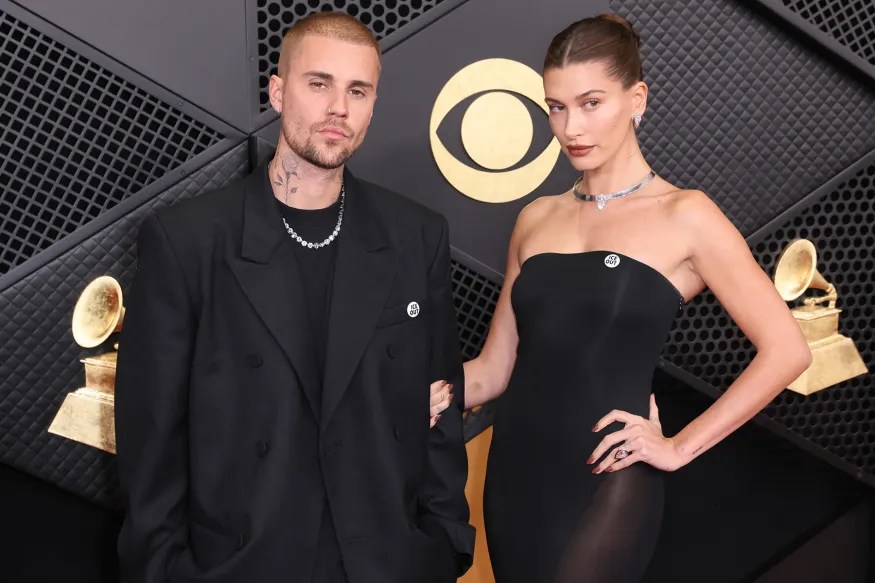
This year’s GRAMMYs were unmistakable political; though rarely chaotic. Multiple artists wore “ICE OUT” pins, a visual through-line that underscored immigration and the presence of I.C.E. in communities across America as one of the central themes. Speeches from Olivia Dean, Kehlani, Shaboozy, Billie Eilish, Bad Bunny, and others reinforced a sense that many artists viewed the Grammy stage as a platform, not just a podium.
Even Trevor Noah leaned into the moment, threading political humor through his monologue without overshadowing the artists themselves; a balancing act he has refined over multiple years as host.
The 2026 Recording Academy’s GRAMMYs will be remembered not only for who won, but for what that night represented. While arguably not as culturally iconic as last years ceremony, it made it’s own image; a night where those in high profile positions voices do indeed matter. Bad Bunny’s Album of the Year win signaled a shift in how global music is valued. And a wave of speeches reminded viewers that pop culture and politics remain deeply intertwined (which is where I come in).
If the GRAMMYs are meant to reflect where music is; and where it’s going; 2026 made one thing crystal: the conversation is bigger than ever.

 they, them, and then some
Leave a comment