


For generations, the American Dream meant possibility. For us, it means survival in an economy where success feels more like luck than effort.
We’ve all seen the movie, the one our parents and grandparents lived. The script was simple: work hard, get a good job, buy a house, raise a family, and retire with enough savings to live comfortably. For much of the 20th century, this wasn’t a fairy tale; it was a reasonably attainable “American Dream.” But for Generation Z, that script has been ripped apart, and we’re left staring at a rigged game where rules were changed before we even got to play.
Let’s talk numbers, because the betrayal is in the data. Back in the 1960s, the median home price in the U.S. was about $11,900. Adjusted for inflation, that’s roughly $120,000 in today’s money. That’s pretty affordable for a family of four. So, what does that buy now? A down payment, if you’re lucky. Today, the median home price has skyrocketed to over $419,000. To put that into perspective, our grandparents’ generation paid the equivalent of three times the median annual income for a house. Today, that figure is closer to seven times.
This isn’t just about housing. The federal minimum wage has been frozen at $7.25 since 2009. If it has simply kept pace with worker productivity since the 1960s, it would be over $24 an hour. If it has tracked inflation, it would be over $10.50. Instead, it’s a cruel joke; a wage that wouldn’t cover the average one-bedroom apartment anywhere in the country.
Meanwhile, the cost of everything from a college education to a gallon of gas has exploded, not just inflated. Our grandparents could pay for a semester of college with a summer job. We’ll be paying off our loans for decades.

You might hear boomers talk about the “Roaring Twenties” or the post-WWII economic boom-periods of immense American optimism, innovation, and widely shared prosperity. They’re not wrong. The assembly line, the rise of consumer culture, and later, the invention of the internet, were all built on an implicit social contract: that the wealth generated by a growing economy would be shared with the workers who helped create it. Strong unions, high top-tier tax rates, and a culture of commitment to building a middle class made that dream a reality for millions.
So, what happened? The contract wasn’t just shredded; it was deliberately rewritten by and for the wealthy.
The late 20th century saw a masterclass in wealth extraction, where the rules of the economy were systematically re-engineered to funnel prosperity upward. How? Through relentless lobbying that slashed taxes on the rich and corporations, crushed union power, and championed deregulation.
The result is an economy that now works for the asset-owning class at the direct expense of the working class. The wealthy don’t just “earn” more; they use their immense capital to make their money work for them, while our generation is told our labor is the key to success. But our labor is being systematically devalued, being used to make the top 1% richer.
Corporations post record profits and reward shareholders with buybacks, while offering us precious “gig economy” contracts and fighting against a living wage. They lobby against universal healthcare and student debt relief because our desperation is their leverage. A worker trapped by medical bills or loan payments is a worker who can’t afford to demand a raise or switch careers.
This isn’t a natural economic cycle; it’s class war, and Gen Z was drafted without our knowledge. The overwhelming wealth gap isn’t just a number; it’s a barrier to entry. It’s the reason a billionaire’s child can fail upward into a life of comfort, while a talented Gen Z graduate with $80,000 in debt is forced to move back home, their potential suffocated by an economic vise engineered by the very same wealthy class.
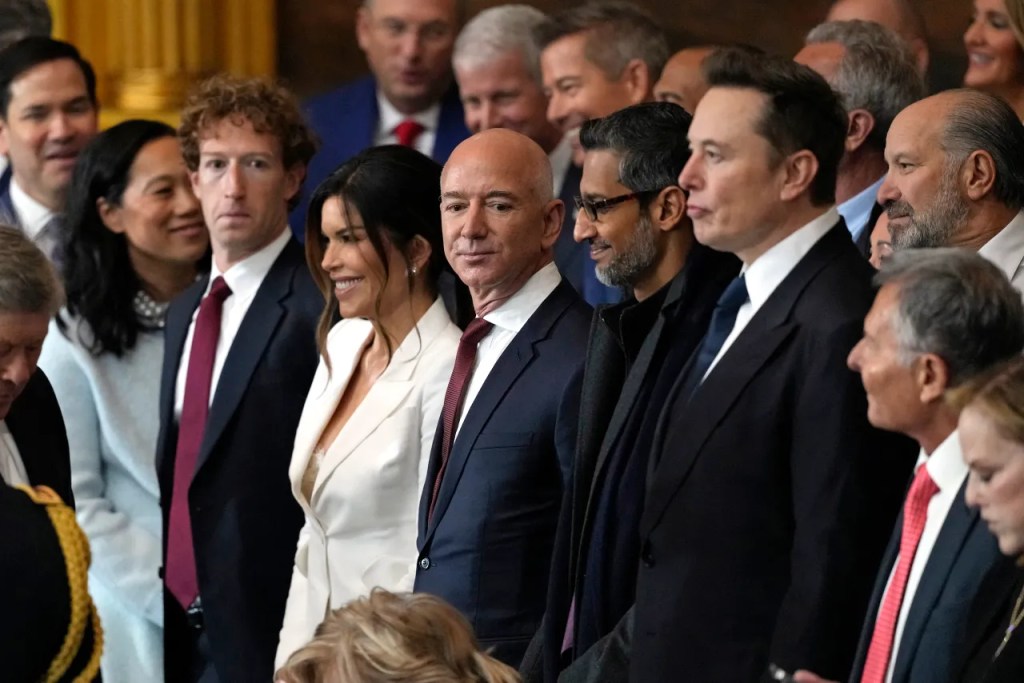
We fast-forwarded through decades of financial deregulation, corporate goods, and policy choices that systematically funneled wealth upward. The game was re-rigged. The “Compensation Culture” you mentioned isn’t the problem; it’s a symptom. The real issue is wealth extraction. While worker productivity has continued to climb, wages have been deliberately decoupled from the value we create. Exploitation is not at an all-time high, which is why there are even billionaires now. It’s why the government won’t raise the minimum wage; they want to keep benefiting without proper reimbursement.
All that excess wealth hasn’t vanished; it has pooled at the very top. The result of a chasm between the generation that isn’t just about age, but about access.
We watched our parents struggle through the 2008 financial crisis, only to be handed the bill for the recovery in the form of stagnant wages and eviscerated public services. Then, just as we were entering the workforce, we were given a global pandemic and an inflammatory spiral.
We are the “crisis generation,” expected to be resilient in the face of economic realities that offer us gig work instead of careers, student debt instead of savings, and the looming threat of climate change instead of a stable future. Calling us lazy because we “don’t want to work,” but in reality, no one wants to hire us because artificial intelligence is taking 50% of all entry-level jobs we need for experience. The “Gen-Z” stare because we’re “rude” but overall we’re just fed up with the disrespect we’re expected to take in the workforce.
The message from older generations is often a condescending, “Just stop buying avocado toast.” But you can’t latte-your-way out of a systemic collapse. The avocado toast would have to be a down payment on a house we can’t afford for the math to even begin working.
The frustration we feel isn’t laziness; it’s the rational response of a generation witnessing a system being actively weaponized against us. We are told to “pull ourselves by our bootstraps” by a class that lobbied to steal the boots, monopolize the straps, and then charge us rent on the floor we’re standing on.
We aren’t asking for a handout; we’re demanding an end to the handouts that have been flowing to the top for decades. We’re demanding an economy where our world is valued, not exploited. The American Dream shouldn’t be a relic of our grandparents’ describe while the wealthy sell off the prices. It’s time to call this what it is: systemic betrayal, and we are the generation that must either rewrite the rules or be crushed by them.

 they, them, and then some
Leave a comment