

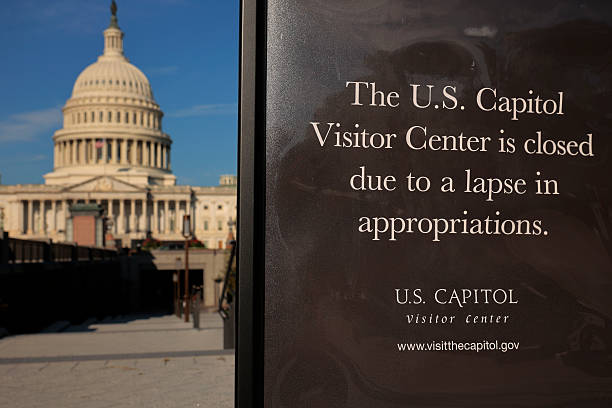
The ongoing partial government shutdown, now in its twenty-third day, continues to disrupt services, delay paychecks for hundreds of thousands of workers, and fuel a bitter political blame game in Washington. With both chambers of Congress at an impasse and no deal in sight, the effects are increasingly being felt by American families, federal employees, and the economy at large.
The core of this disagreement stems from a policy dispute that has blocked the passage of a spending bill to keep the government funded.
Republicans in the Senate have repeatedly brought a “clean” continuing resolution (CR) to the floor, a short-term funding extension that does not include new policy. This measure has failed to advance in twelve separate votes, as it requires 60 votes to pass and lacks Democratic support.
The official White House communication and allied groups have consistently labeled the situation the “Schumer Shutdown,” arguing that Democrats are holding the government “hostage over free healthcare for illegal aliens” (god I hate that term) and refusing to pass a nonpartisan funding bill.
Interesting form of opinions considering Republicans control both chambers of Congress, the White House, and have a conservative majority Supreme Court.
Democrats have rejected the Republican-backed spending bill, demanding that an extension of government funding also include the renewal of enhanced subsidies for Affordable Care Act (ACA) health plans, which are set to expire at the end of the year. They argue that these subsidies are vital to keeping healthcare affordable for millions of Americans.
Additionally, Democratic lawmakers seek curbs on the president’s use of “recessions” to slash congressionally approved funding. Democrats counter the Republican narrative by asserting that the GOP is “weaponizing hunger” and pushing a partisan bill that “takes health care away from families and raises premiums.”
The real-world consequences of this political deadlock are severe and wide-reaching. Approximately 730,000 federal employees deemed “essential,” including TSA officers and air traffic controllers, are being forced to work without pay. Another 670,000 have been furloughed. Active-duty military personnel are also working without pay and are set to miss their first-ever paycheck on November 1st if the shutdown continues.
Critical services are also at risk. While air travel continue for now, transportation officials have warned that the system’s capacity may need to be reduced due to the immense stress on unpaid staff, potentially leading to significant delays and cancellations. For millions of Americans relying on food assistance, the situation is dire.
The Special Supplemental Nutrition Program for Women, Infants, and CHildren (WIC) is expected to run out of funds. At least 25 states have warned that November benefits for the Supplemental Nutrition Assistance Program (SNAP), may not be paid if the shutdown is not resolved. Although national parks may remain accessible, visitor services, restrooms, and maintenance have been halted, and some parks may close entirely.
Jill Hornick, a service representative at a Social Security office in Illinois, is one of the hundreds of thousands working without pay. “It’s very annoying that employees who are furloughed can collect unemployment, but employees who are essential and have to work without pay cannot, she said. She is now scrambling to pay for gas and daycare while contacting her mortgage lender for leniency.
Gus Papathanasiou, head of the U.S. Capitol Police union, reported that his officers are taking out loans and borrowing from family to pay rent and feed their families. “The stress level that our controllers are under right now I think is unacceptable,” he stated.
Transportation Secretary Sean Duffy has warned that the system’s safety is maintained by reducing capacity. “We will reduce the capacity of airplanes taking off and landing, or we will cancel flights,” he said. The head of the air traffic controllers’ every day, which affects their focus.
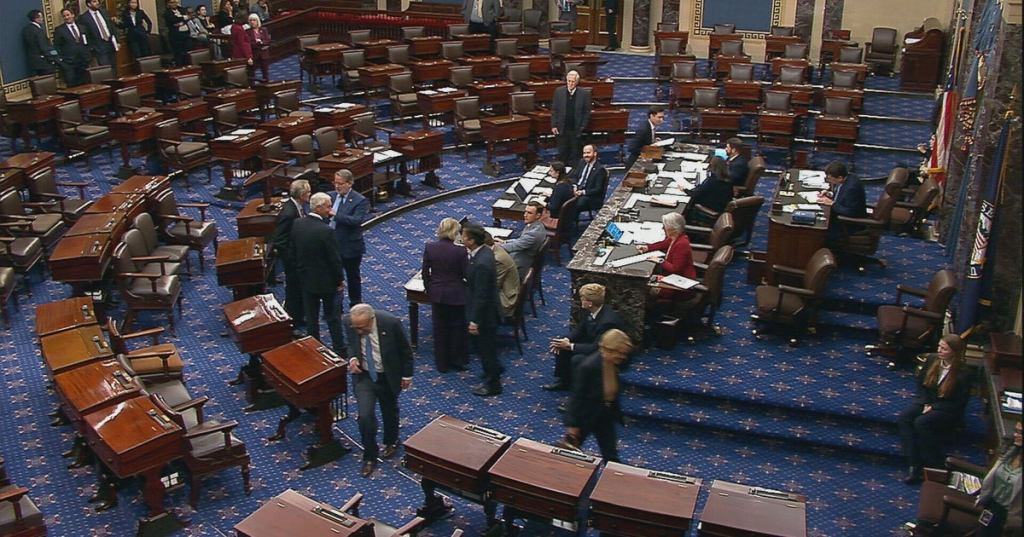
The political impasses show no signs of breaking. The Senate adjourned and is not scheduled to return until Monday, and the House has canceled its votes for the coming week unless a deal is reached.
Pressure is expected to intensify dramatically around November 1, when three critical deadlines converge:
- Active-duty military personnel are set to miss their first paycheck in history due to a shutdown.
- The open enrollment period for ACA health insurance begins, with the looming threat of premium increases if the subsidies are not extended.
- SNAP benefits for millions of Americans in at least 25 states are scheduled to be cut off due to a lack of funds.
Attempts to provide partial relief have also stalled. The Senate recently failed to advance the “Shutdown Fairness Act,” a Republican-backed bill that would have paid essential workers and troops during the shutdown. Democrats opposed it, arguing it would give the president too much power to choose who gets paid, and have proposed their own countermeasures.
As the shutdown drags on, the economic and social costs continue to mount, leaving American families and federal workers caught in the middle of a political battle with no end in sight.


 they, them, and then some
Leave a comment