

National Guard troops now carry firearms on city streets as Trump’s crackdown raises fears of militarized policing in a city with declining crime.
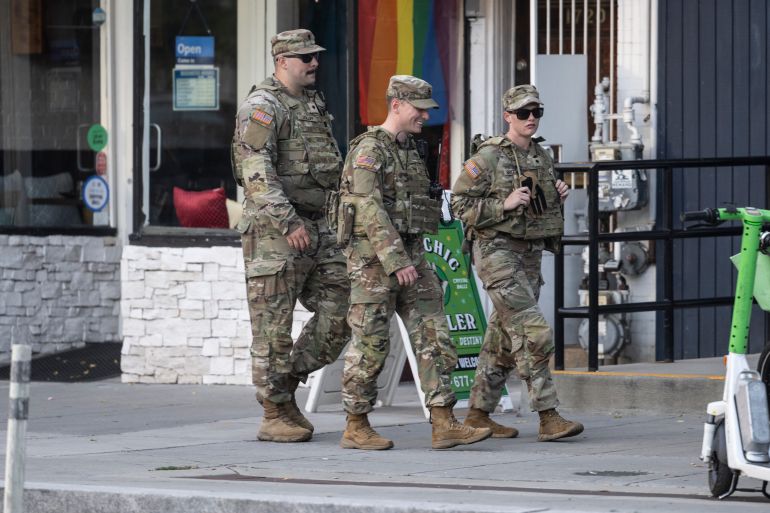
Washington, D.C. woke up to a sobering new reality: National Guard troops are now patrolling the city’s streets armed with live firearms. The escalation comes directly from the Trump administration, which has expanded its controversial deployment of the Guard from a symbolic show of force into a militarized presence in the nation’s capital. For many residents, the sight of soldier with rifles stationed outside transit hubs and neighborhood streets is not reassuring; it’s frightening.
This latest decision marks a dramatic escalation of Trump’s so-called “crime crackdown,” a justification that has been shaky from the beginning. When the Guard was first deployed in D.C., the administration framed it as a response to an alleged surge in violent crime. But the facts tell a different story: the Metropolitan Police Department’s own data shows that overall crime rates, including homicides, have been steadily declining. By weaponizing rhetoric instead of addressing reality, Trump manufactured a crisis where none existed. Now, the crisis is real – not in crime statistics, but in civil liberties and democratic governance.
The National Guard’s initial presence in D.C. alread drew criticism from local officials and civil rights organizations. Residents voiced concerns that their city; unlike states; has no control over its Guard, leaving decisions entirely in the hands of the federal government. Mayor Muriel Bowser, who has consistently opposed the deployment, warned that the move undermined community trust and fed into the perception of D.C. as an occupied city rather than a self-governing jurisdiction.
Despite these objections, Trump pressed forward, insisting that “rampant crime” and “lawlessness” justified the extraordinary measures. His administration leaned heavily on examples of isolated incidents, such as carjackings and robberies, to paint a broader picture of chaos. Yet even those numbers, when examined in context, show decreases compared to previous years. In other words, Trump’s narrative of a city in crisis was not grounded in data but in political theater.
What shifted in recent days was not the crime rate but the administrations tolerance for optics. The Pentagon, under the direction of Defense Secretary Pete Hegseth and the White House approval, granted the Guard authority to carry service weapons while on patrol. This unprecedented step, particularly in a civilian environment where local leaders have not requested such force, represents a new stage in federal overreach. Troops who were once stationed in passive support roles – unarmed, directing traffic or offering logistics – are now fully armed, blurring the line between community presence and military occupation.
Critics argue the decision has little to do with crime and everything to do with politics. By dramatizing urban unrest, Trump not only stokes fear but positions himself as a “law-and -order” leader willing to do what other won’t. It’s a strategy reminiscent of past moments where presidents invoked federal authority to project strength, but rarely has it been this nakedly political.
The problem is that Washington is not a battleground, it is home to more than 700,000 residents who had no say in this decision. They cannot vote in Congress, and their mayor’s opposition was overridden by federal fiat. This lack of representation has long been a sore point for D.C. residents, but now the stakes are higher. For the first time in recent memory, residents are forced to live alongside an armed military presence that they never asked for.
Civil rights leaders warn that this sets a dangerous precedent. “Allowing the National Guard to carry live firearms on the streets of D.C. is not about keeping people safe,” in their own communities.” The potential for escalation in even routine encounters; traffic stops, protests, or neighborhood patrols; is immense. A single misunderstanding could have devastating consequences.
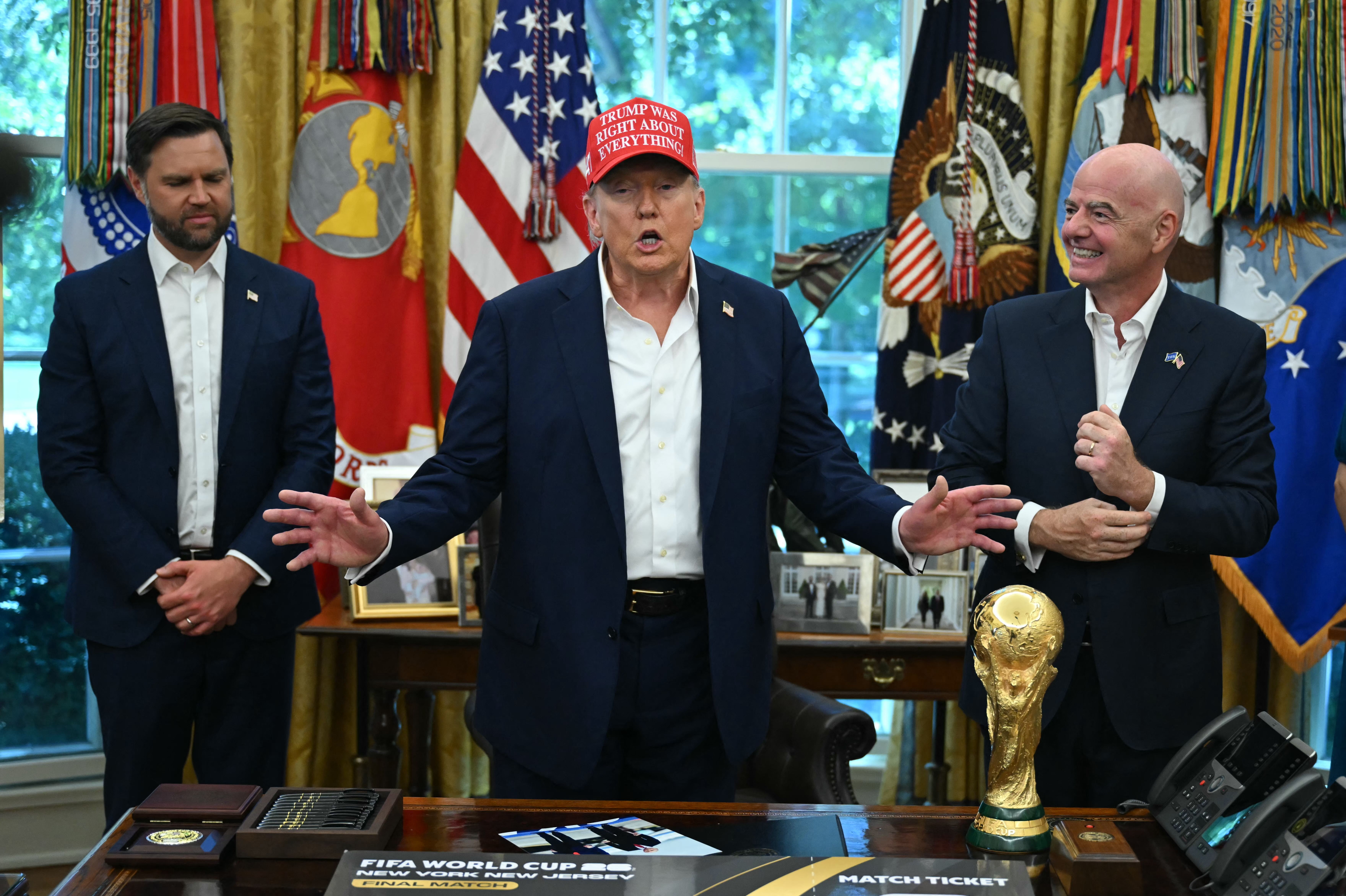
What’s clear is that trump’s militarization of D.C. is not confined to the capital. He has already threatened to send federal law enforcement into other Democrat-led cities, most notable Chicago, citing many of the same claims of “out-of-control crime.” The pattern is hard to ignore: blue cities are being singled out for harsh federal interventions that bypass local leadership.
For cities, this looks less like crime prevention and more like political punishment. D.C. and Chicago are not just cities struggling with public safety; they are Democratic strongholds, symbols of oppositions to Trump’s vision. By dispatching armed forces into these places, the administration is flexing its federal power to embarrass and intimidate local leaders, while sending a chilling message to residents that their votes and voices matter less than the president’s political agenda.
This political maneuvering is why many view the National Guard’s arming not as a public safety strategy but as a blunt political weapon. Trump’s posture towards D.C. and his looming threats against Chicago underscore a troubling reality: America’s cities are becoming props in a partisan drama, their residents caught in the crossfire of federal strong-arming.
If the goal was to respond to crime, the evidence simply doesn’t add up. According to Metropolitan Police statistics, violent crime in 2024 fell compared to 2023, continuing a downward trend in categories such as homicides, sexual assaults, and robberies. Property crimes, too, have declined in several neighborhoods. Yet Trump continues to insist that D.C. is plagued by “uncontrolled lawlessness,” ignoring the facts in favor of fear-driven soundbites.
By inflating the perception of crime, the administration has crafted a narrative that justifies its unprecedented actions. The problem is that this narrative is divorced from the reality D.C. residents live every day. In doing so, Trump not only undermines trust in local law enforcement but also deepens the divide between the federal government and the communities it claims to protects.
At the heart of this issue is a democratic contradiction. D.C. residents pay federal taxes, serve in the military, and contribute to the nation like any other citizens; yet they lack the full representation and autonomy that states enjoy. This latest decision underscores the consequences of that imbalance. When the White House decides the capital city needs soldiers with rifles on its streets, D.C. residents have no recourse but to live with it.
The result is a city that feels less like the seat of democracy and more like a stage for authoritarian performance. Trump’s decision to arm the National Guard is not about making D.C. safer; it’s about making D.C. look dangerous. It’s a performance designed for cameras and headlines, not for the people who call the city home.
What began as a controversial but symbolic deployment has now become a disturbing reality: armed troops in America’s capital, justified by misleading claims and imposed over the objections of local leaders. For many, this is not about crime; it’s about power, control, and the erosion of democratic norms.
D.C. does not need soldiers with rifles. It needs investment, representation, and trust in its communities. By choosing force over facts, Trump has turned the city into a backdrop for fear, leaving residents to wonder how much further this militarization might go.


 they, them, and then some
Leave a comment